SquishyMusic
An instrument with nothing to learn. You pick it up and squeeze it, and the pressure is the whole interface.
View prototype site →- Problem
- Most digital instruments make you learn a layout, gestures, or a mapping before you can play anything.
- Response
- A soft orb where pressure anywhere on the surface is the whole interface. No manual, nothing to read.
- Outcome
- Grip testing led to a wider sensing zone and slower light response; two rounds of NYU Prototyping Fund support.
The Problem
Most digital instruments require you to learn something before you can play anything: a button layout, a set of gestures, a MIDI mapping. That requirement is what keeps people who think they are not musical from picking one up at all.
I wanted the first five seconds to require no instruction at all. No manual, no onboarding screen, nothing to read.
The Approach
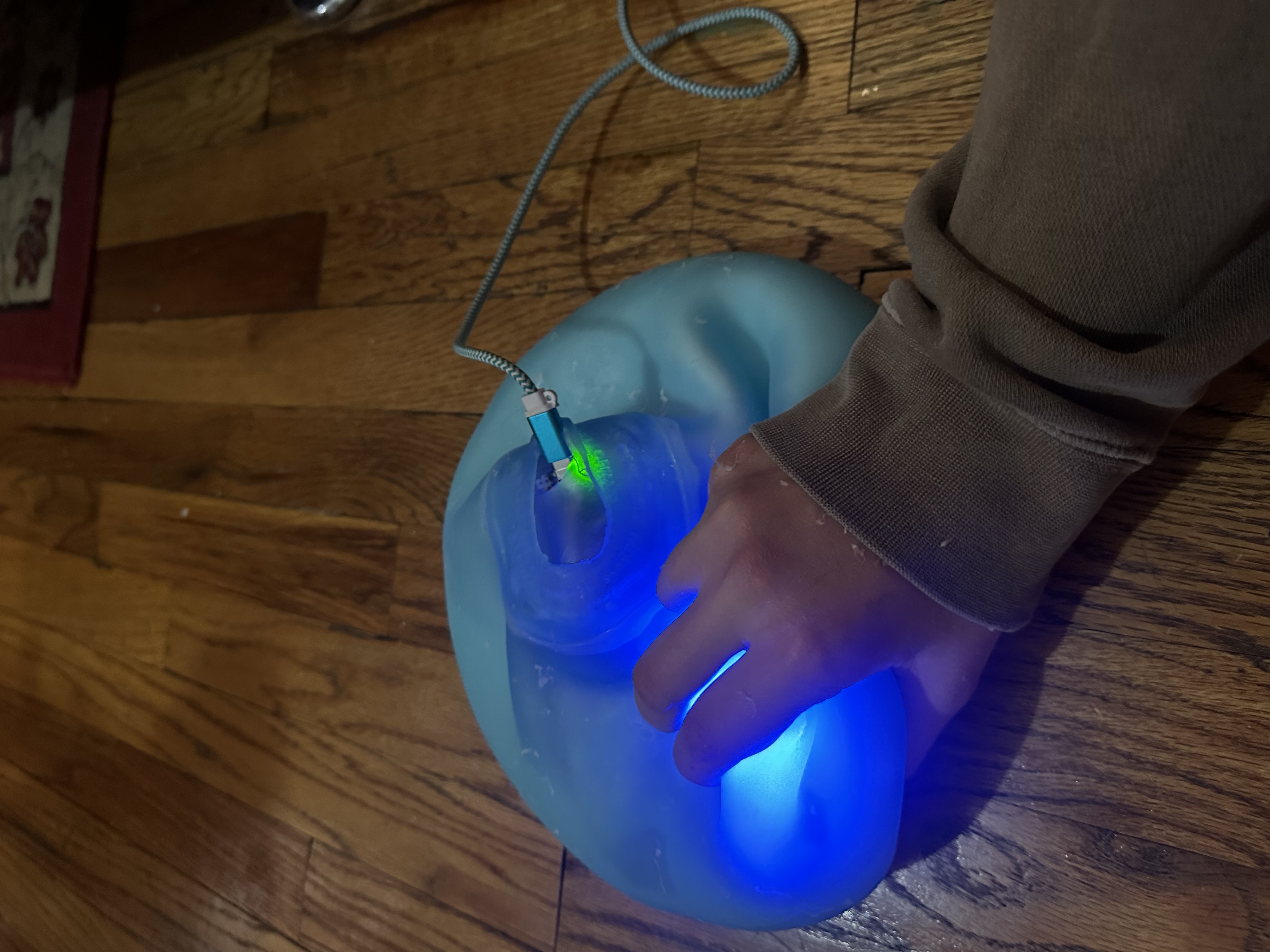
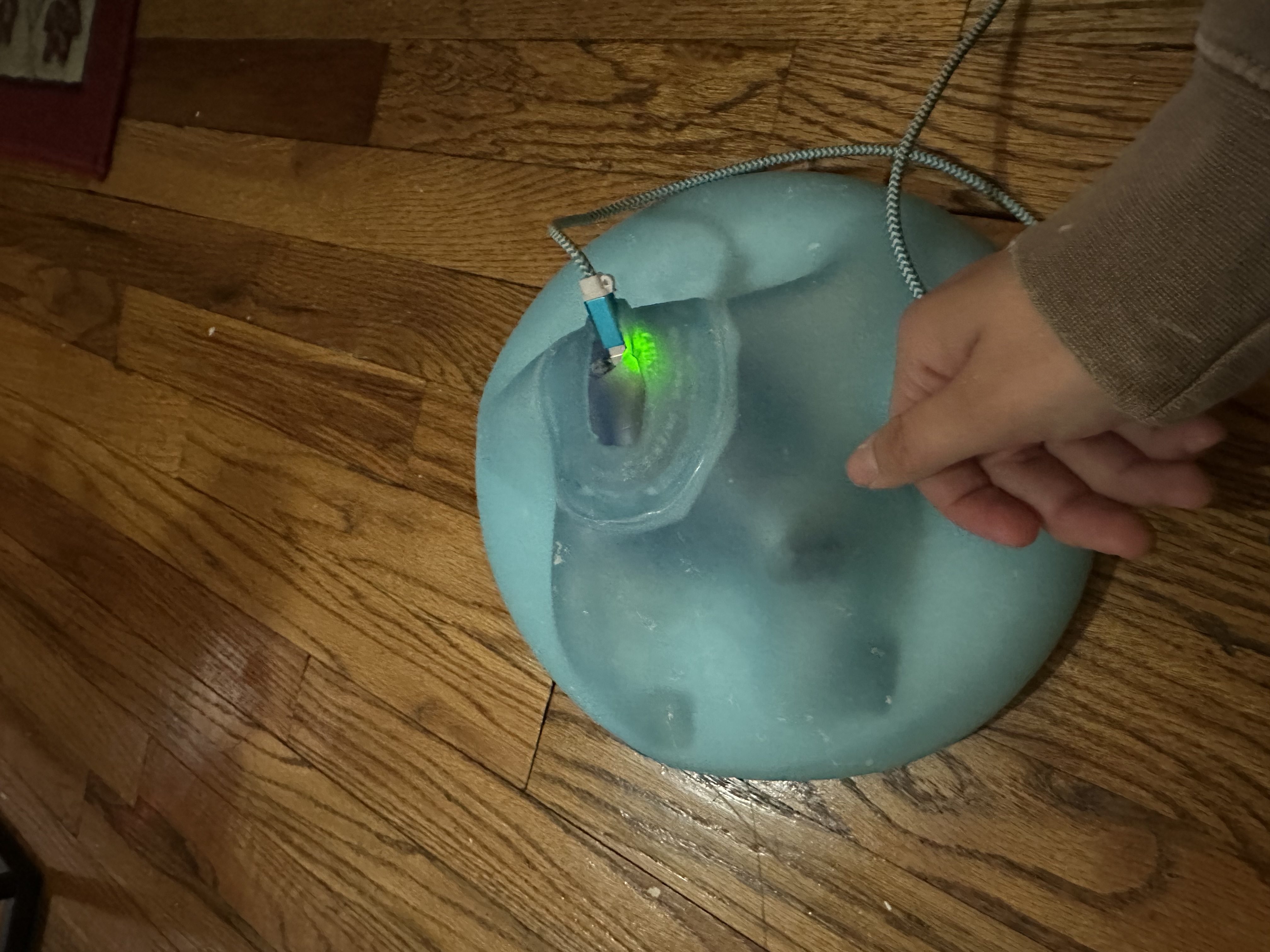
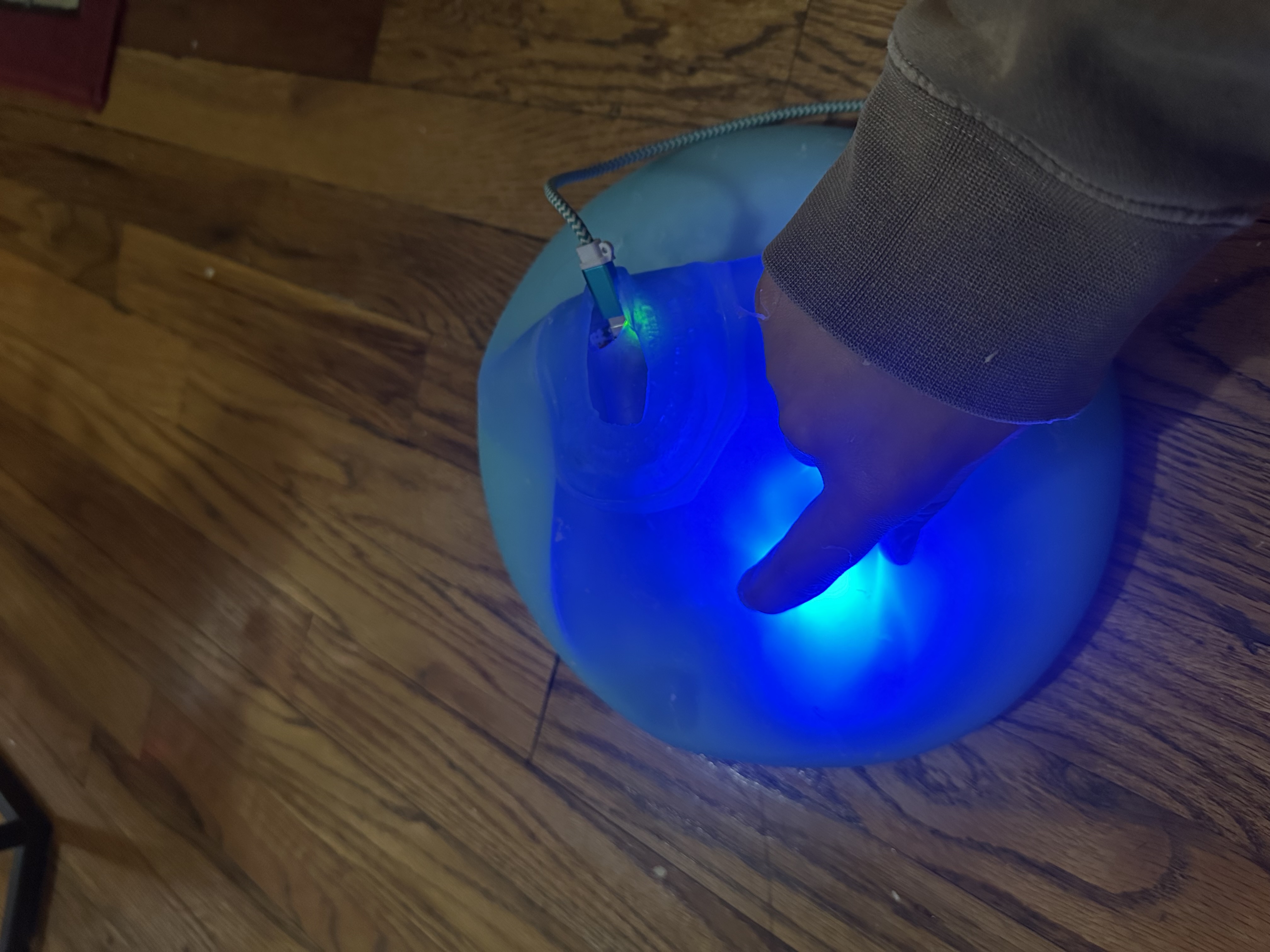
I started with a $12 off-the-shelf stress toy rather than fabricating anything, so that I could answer one question cheaply: is pressure on its own expressive enough to hold someone's attention? I tested it informally on people in the hallway. They squeezed, twisted, and cradled it without being told to, which was enough to confirm the interaction model before I committed to building anything custom.
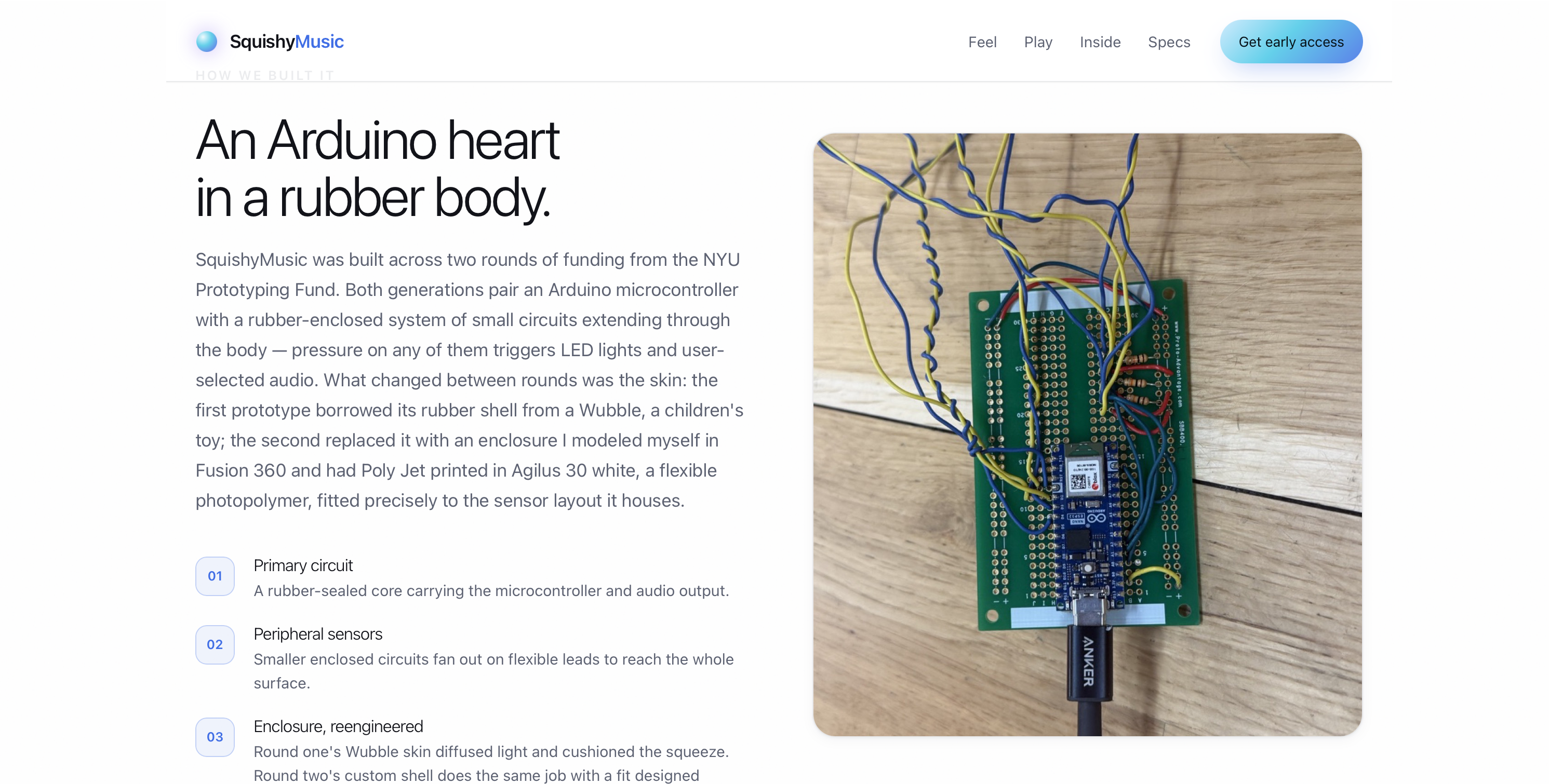
From there I moved to a custom shell in Agilus 30, PolyJet-printed, and distributed the pressure sensors across the entire surface rather than at fixed points. This means there is no correct way to hold it, and every grip is a valid input rather than a wrong answer. An Arduino Nano ESP32 maps continuous pressure to sound and light in real time, so the feedback is immediate and legible the first time someone picks it up.
What I Learned
Watching people play it taught me more than a spec sheet could. Testers consistently used two hands and shifted their grip within seconds, so I widened the pressure-sensitive zone and slowed the light response. That made the object read as listening rather than glitching, and it was a small timing change that stopped it feeling broken.
The project received two rounds of NYU Prototyping Fund support, largely on the strength of how people reacted the first time they held it. That was the clearest signal I had that the no-interface approach was working.
The Site
I built a companion site for the instrument, covering how the orb feels to hold and the Arduino-and-rubber build underneath it.
Specs
Arduino Nano ESP32
Commercial Wubble rubber toy
Custom Agilus 30, PolyJet printed
Autodesk Fusion 360