Case Study — Web & AI Research
Simulacra
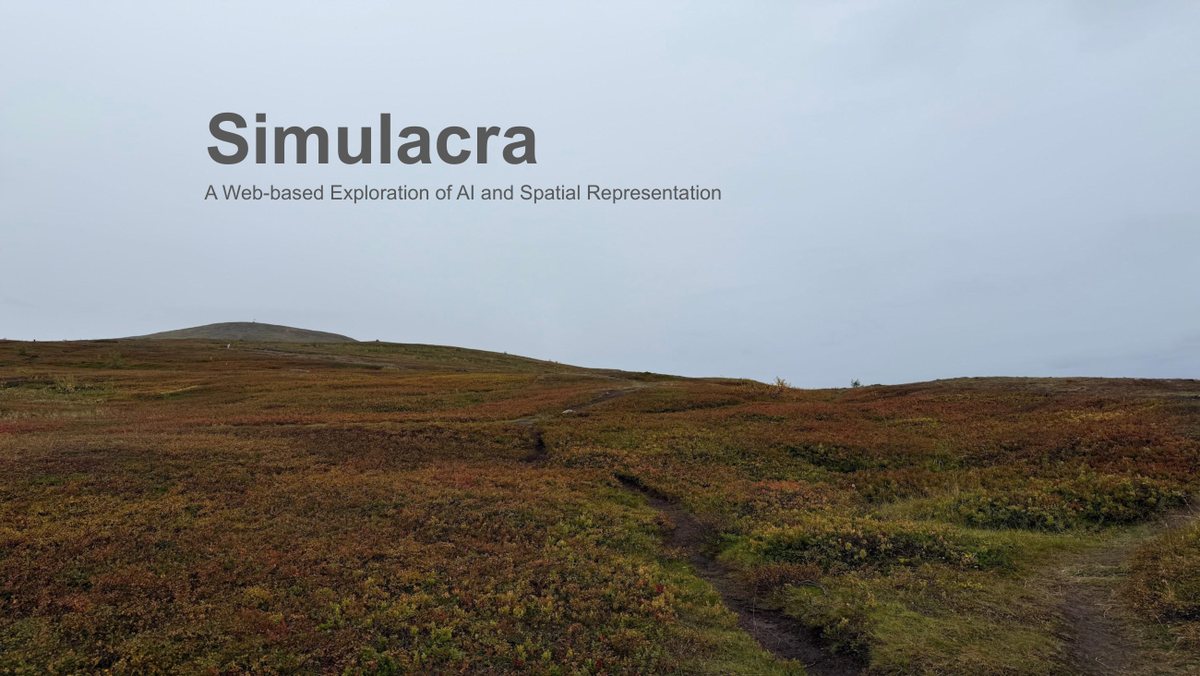
A web-based exploration of AI and spatial representation — photographs of real places that branch into networks of AI copies, each further from the original, until the image bears no relation to anywhere at all.
The Premise
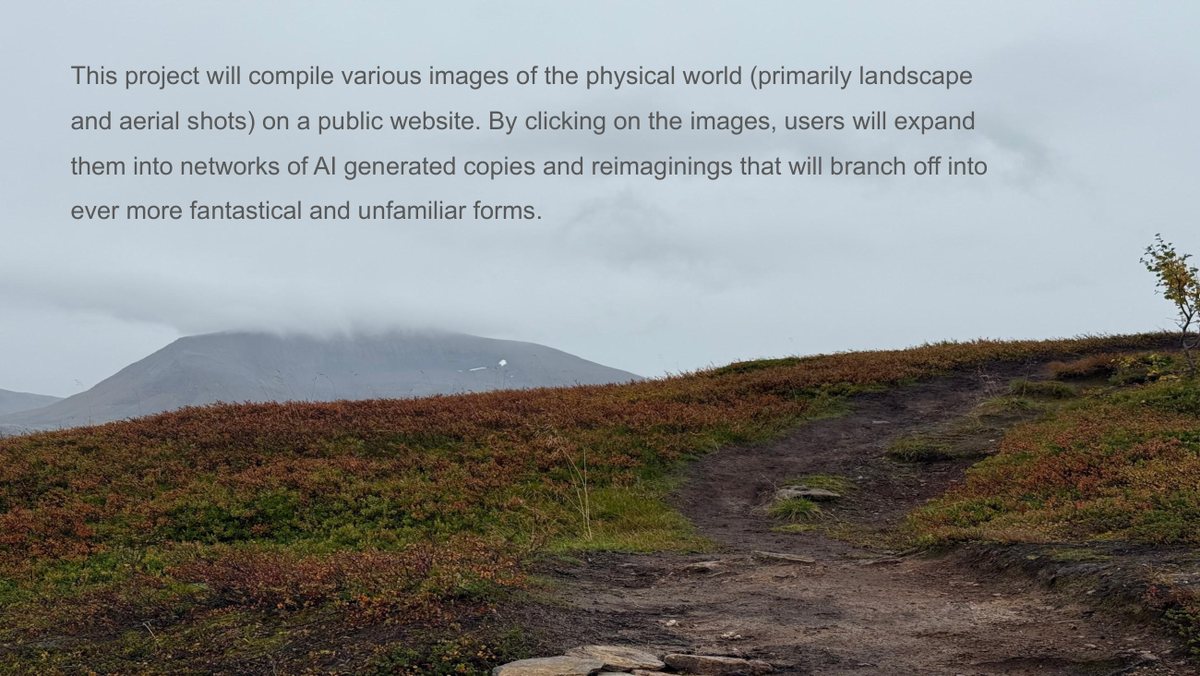
Simulacra compiles images of the physical world — primarily landscape and aerial shots — on a public website. Clicking an image expands it into networks of AI-generated copies and reimaginings that branch off into ever more fantastical and unfamiliar forms.
The aim is a rabbit hole: you start at a real place and travel, one generated copy at a time, until you are somewhere that has never existed.
Why
AI models produce representations of reality without ever having a direct experience of it. They are trained on representations we made, and then generate new representations that synthesize those. That makes the way AI represents space and the physical world genuinely strange, and worth looking at closely.
The concept is loosely inspired by Baudrillard’s Simulacra and Simulation, and its levels of copies that progressively lose their resemblance to reality — ending in hyperreality, where the line between the real and its simulation collapses altogether.
What the Prompts Do
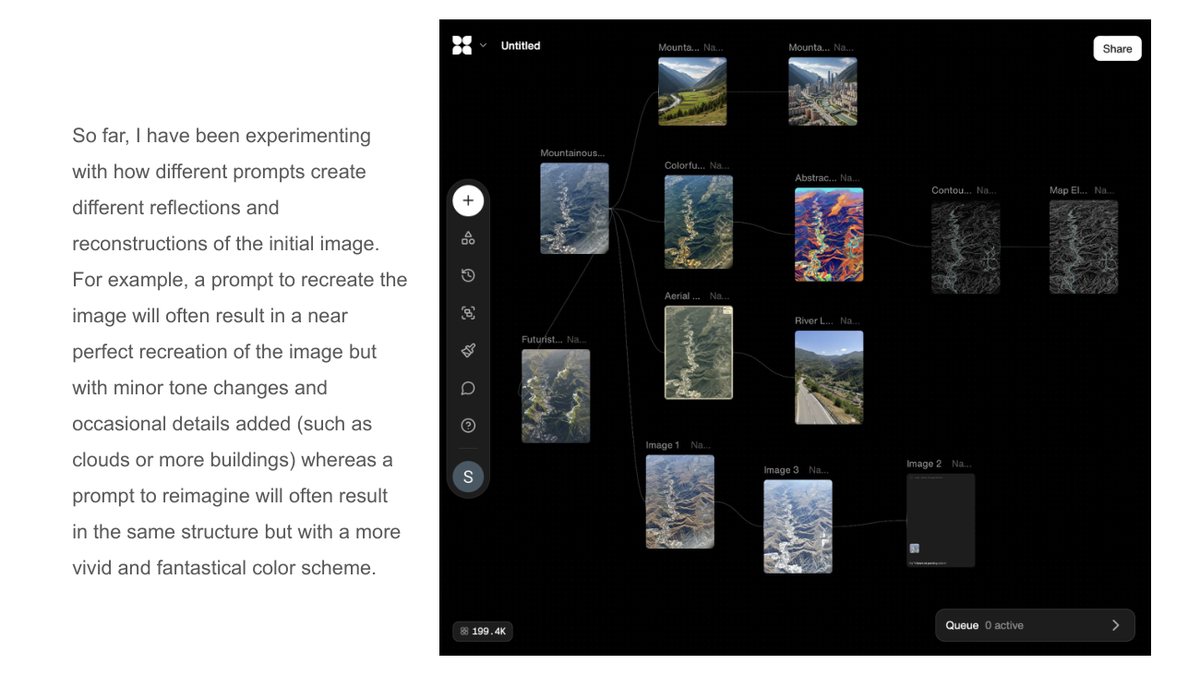
Different prompts produce very different reflections of the same source image. A prompt to recreate usually returns a near-perfect copy, with minor tone shifts and the occasional invented detail — an extra cloud, another building. A prompt to reimagine keeps the underlying structure but pushes the palette somewhere far more vivid and fantastical.
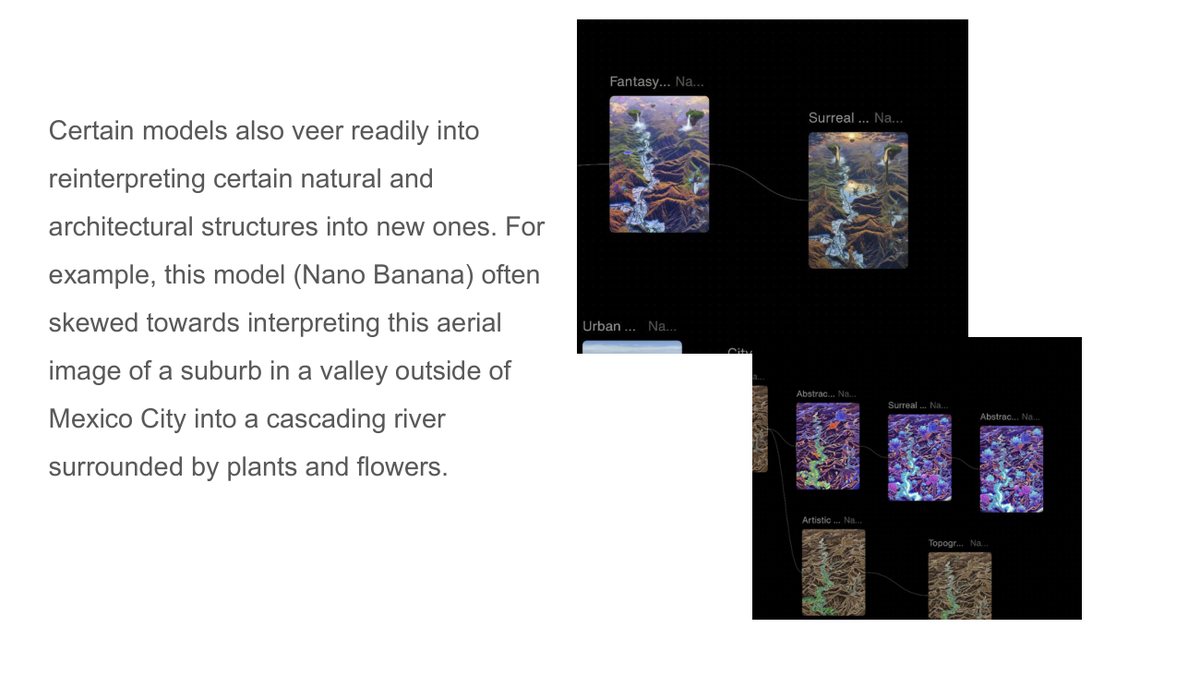
Some models also reinterpret natural and architectural structures into entirely new ones. Nano Banana repeatedly read an aerial photograph of a suburb in a valley outside Mexico City as a cascading river surrounded by plants and flowers.
Where It Stands
Shown as part of Regensis at the Flora Residency and Group Show, Brooklyn, 2025.
The work is ongoing. The next steps are to keep building out the range of images and compile them into the site — building the site early rather than late, so that the experience itself shows how large the image library needs to be to feel like an extensive rabbit hole without collapsing under its own weight.