Case Study — Interaction Design
Slimesynthzer
A synthesizer played by squishing slime, where the material's own changing resistance is the input.
The Problem
Conductive-touch instruments usually rely on rigid materials such as metal plates and capacitive pads. They behave predictably, and they feel cold and mechanical. I wanted to know whether an input surface could feel alive instead — squishable, imprecise, a little unruly — and still function as a reliable interface rather than a novelty.
The Approach
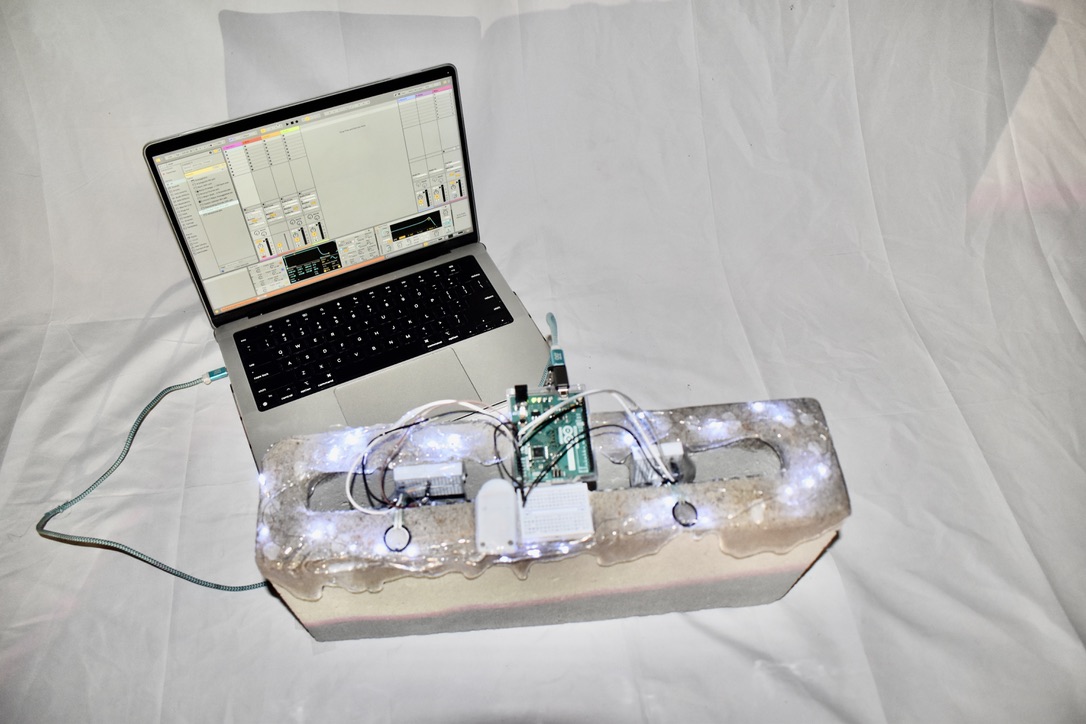
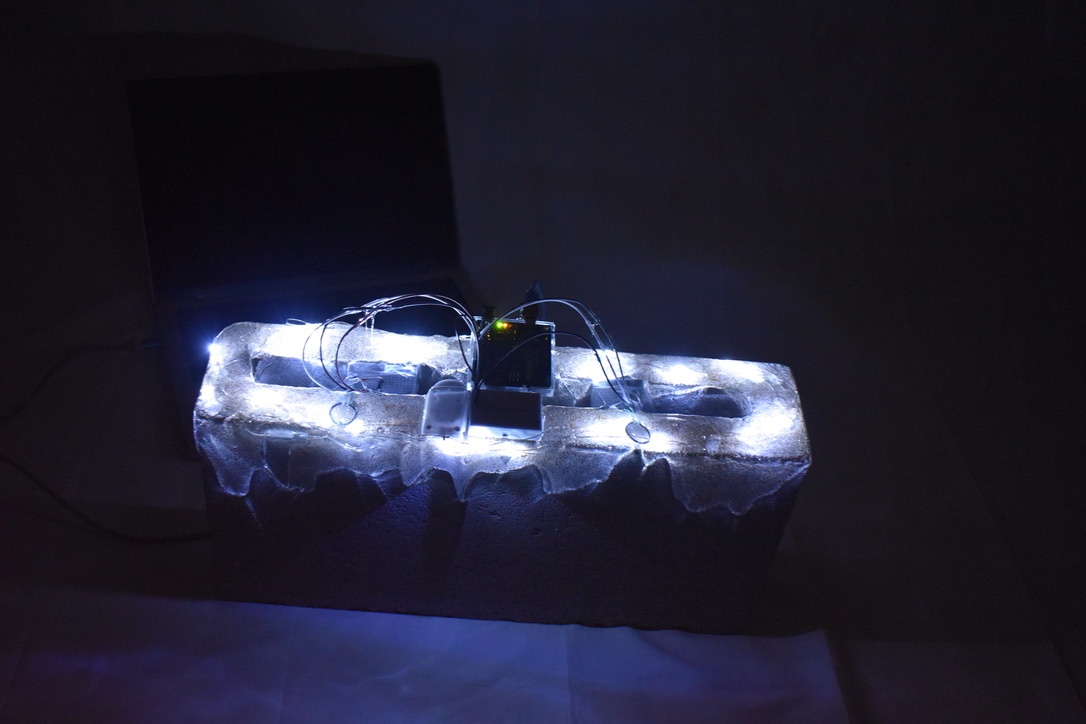
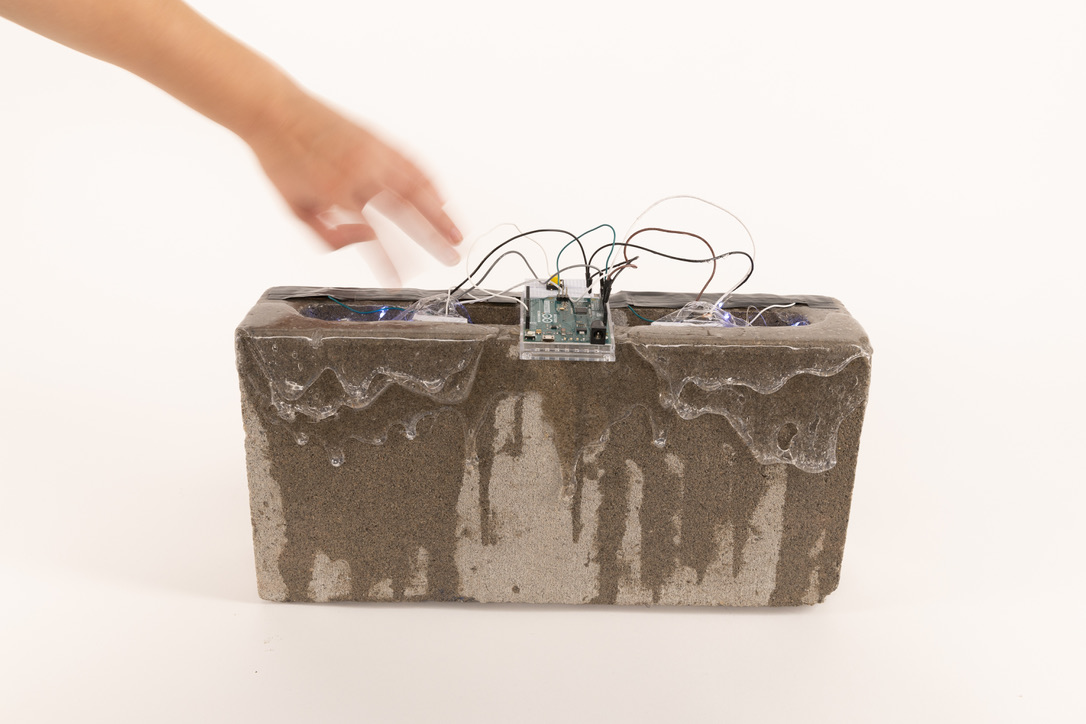
A cinder block and silicone gel slime became the interface. The slime's conductivity changes as you press, stretch, or reshape it, and that is read as a continuous MIDI signal rather than a binary on/off trigger. Because the material's resistance shifts unpredictably, I had to design the mapping to tolerate noise rather than fight it. I smoothed the signal just enough that intentional gestures stayed legible, without flattening the material's natural texture into something sterile.
The design question was really about trust: how much unpredictability can an interface have before someone stops believing it is responding to them at all?
What I Learned
The most interesting feedback came from people who had never touched a synthesizer before. The tactile, squishy quality of the interface lowered the intimidation of playing an instrument in a way a conventional MIDI controller does not. It reinforced something I keep returning to: unconventional materials can make an interaction more accessible rather than less, as long as the mapping between gesture and feedback stays honest.